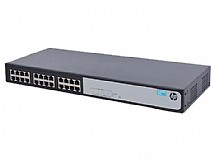
Features
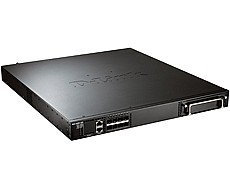
• Interface: 8 fixed 10 Gigabit Ethernet ports with one expansion module
• The console port RJ-45 to control out-of-band
• Control Port 10/100/1000 Base-T with RJ-45 connector for remote control of out-of-band
• 1 slot for SD-cards
Performance
• Switch fabric: 480 Gbit / s
• Max. packet rate: 357.14 Mpps
• Buffer size packages: 9 MB
• Table of MAC-addresses: 128K
Stacking
• Virtual Stacking / 32 devices in steke2
- Supports D-Link Single IP Management
Function of L2
• MAC-address table
- 128K records
• Flow Control
- 802.3x Flow Control for full duplex
- Method of Back Pressure for half duplex
- HOL Blocking Prevention
• Spanning Tree
- 802.1D STP
- 802.1w RSTP
- 802.1s MSTP
- Root Restriction
• The Loopback Diagnostics2
• 802.1AX Link Aggregation
- Max. 16 groups per device, 12 ports per
• ERPS2 (Ethernet Ring Protection Switching)
• Port Mirroring
- One-to-One, Many-to-One
- Supports Mirroring for Tx / Rx / Both
- Up to 4 groups
• Flow Mirroring
- One-to-One, Many-to-One
- Rx
- Up to 4 groups
• Jumbo-size frames
- Up to 12,000 bytes
Multicast Layer 2
• IGMP Snooping
- IGMP v1/v2/v3 Snooping
- Support for 4K IGMP groups
- Supports up to 1K static multicast groups
- IGMP on VLAN
• multicast filtering
- Redirect all groups
- Redirect all unregistered groups
- Filter all unregistered groups
• MLD Snooping2
- MLD v1/v2 Snooping
- Supports up to 4K groups
- MLD Snooping Fast Leave-based hosts
VLAN
• 802.1Q
• 802.1v
• The Double VLAN (Q-in-Q)
- Q-in-Q port-based
- Selective Q-in-Q
• VLAN-based port
• VLAN-based MAC-addresses
• VLAN-based subnets
• Private VLAN2
• Group VLAN
- Max. 4K static VLAN groups
- Max. 4094 VIDs
• GVRP
- Up to 4K dynamic VLAN groups
QoS (Quality of Service)
• 802.1p
• 8 queues per port
• Queue management
- Strict
- Weighted Round Robin (WRR)
- Strict + WRR
- Round Robin (RR)
- Weighted Elastic Round Robin (WERR)
• CoS-based
- 802.1p Priority Queues
- DSCP
- IP-address
- MAC-address
- VLAN
- IPv6-Class Traffic
- IPv6 flow label
- TCP / UDP port
• Bandwidth Management
- Based on the port (incoming / outgoing / min. Step up to 8 kbit / s)
- On the basis of the flow (incoming / outgoing / min. Step up to 8 kbit / s)
- The output queue (minimum step to 8 kbit / s)
• Three Color Marker
- TrTCM
- SrTCM
• Congestion Control
- WRED
• Compatible with the flow of the action:
- Tagging 802.1p priority
- Tagging TOS / DSCP
- Flow control
- Committed Information Rate (CIR)
Level functions L3 (for version SI)
• ARP
- 512 Static ARP
- Gratuitous ARP2
• IP-interface
- Supports up to 256 interfaces
• Loopback Interface 2
Layer 3 routing (for version SI)
• Routing by default
• Static Routing
- Max. up to 1K entries for IPv4
- Max. up to 512 entries for IPv62
- Support the distribution routes
- Support for the secondary route
- Support for equal / weighted cost multipath routing
Access Control Lists (ACL)
• Max. ACL entries:
- Up to 1,792 members of the access rules
- Up to 1K outgoing access rules
- Up to 1K VLAN rules
• ACL based on time
• ACL based on:
- 802.1p priority
- VLAN
- MAC-address
- Ether type
- IP-address
- DSCP
- The type of protocol
- Non TCP / UDP port
- IPv6 Traffic Class
- IPv6 flow label
Safety
• Port Security
- Up to 12K MAC-addresses per port / system
• Control of broadcast / много-адресных/одноадресных storms
• D-Link Safeguard Engine2
• DHCP Server Screening2
• The IP-MAC-Port Binding2
- Checking the ARP-Packet
- Check the IP-packet
- DHCP Snooping
• Prevent attacks ARP Spoofing2
- Max. 64 records
• Traffic Segmentation
• SSL2
- Support v1/v2/v3
- Support for access IPv4/v6
• SSH
• Prevention BPDU attacks
• Prevent DOS attacks
• AAA
• 802.1X
- Access control based on the port
- Access control based on host
- Dynamic VLAN Assignment
- Identity-driven Policy (VLAN / ACL / QoS) Assignment
• Control access to the web-based interface (WAC) 2
• Access control based on MAC-address (MAC) 2
• Guest VLAN
Standard MIB and RFC
• RFC1213 MIB II
• RFC1907 SNMP v2 MIB
• RFC5519 IGMP v3 MIB
• RFC1724 RIP v2 MIB
• RFC2021 RMONv2 MIB
• RFC1643, RFC2358, RFC2665 Ether-like MIB
• RFC2668 802.3 MAU MIB
• RFC2674 802.1p MIB
• RFC2618 RADIUS Authentication Client MIB
• RFC2096 IP Forwarding Table MIB
• RFC2932 IPv4 Multicast Routing MIB
• RFC2934 PIM MIB for IPv4
• RFC2620 RADIUS Accounting Client MIB
• RFC2925 Trace Out MIB
• RFC2925 Ping MIB
• RFC1850 OSPF MIB
• Private MIB
• RFC1112, RFC2236, RFC3376, RFC4541
• IGMP Snooping
• RFC4363 802.1v
• RFC2338 VRRP
• RFC1058, RFC1388, RFC1723, RFC2453, RFC2080 RIP
• RFC1370, RFC1765, RFC2328, RFC2740, RFC3101 makes RFC1587 obsolete, RFC2328 makes RFC1583, RFC2178 OSPF v2, v3
• RFC1771, RFC1997, RFC2439, RFC2796, RFC2842, RFC2918 BGP
• RFC3973 PIM-DM
• RFC5059 PIM-SM
• RFC3569, RFC4601, RFC4608, RFC4607, RFC4604 PIM SSM
• RFC3376 IGMP
• RFC2475 Priority Queue Mapping
• RFC2475, RFC2598 Class of Service (CoS)
• RFC2597, RFC2598 QoS Flow Actions
• RFC2697, RFC2698 Three Color Marker
• RFC2093, RFC2904, RFC2095, RFC2906
• AAA
• RFC1321, RFC2144, RFC2313, RFC2420, RFC2841, RFC3394 Encryption
• RFC2289 One-Time
• RFC3580 802.1X
• RFC2866 RADIUS Accounting
• RFC2138, RFC2139, RFC2865, RFC2618 RADIUS Author. for Management Access
• RFC1492 TACACS + Auth. for Management Access
• RFC2068, RFC2616 Web-based GUI
• RFC854 Telnet Server
• RFC783, RFC1350 TFTP Client
• RFC1157, RFC1901, RFC1908, RFC2570, RFC2574, RFC2575, RFC3411-17 SNMP
• RFC3164 System Log
• RFC2819 RMON v1
• RFC951, RFC1542, RFC2131, RFC3046 BootP / DHCP Client
• RFC1769 Time Setting
• RFC2131 DHCP Server
• RFC1191 MTU Setting
• RFC1065, RFC1066, RFC1155, RFC1156, RFC2578 MIB Structure
• RFC1215 MIB Traps Convention
• RFC4188 Bridge MIB
• RFC1157, RFC2571-2576, RFC3411-3415, RFC3418 SNMP MIB
• RFC1901-1908, RFC1442, FC2578 SNMP v2 MIB
• RFC2737 Entity MIB
• RFC768 UDP
• RFC791 IP
• RFC792 ICMP
• RFC793 TCP
• RFC826 ARP
• RFC1338, RFC1519 CIDR
• RFC2716, RFC3748 EAP
• RFC2571, RFC2572, RFC2573, RFC2574 SNMP
Management
• Management of web-based interface
• Command Line Interface CLI
• Telnet Server
• TFTP Client
• FTP Client
• Monitoring
• SNMP
- Support v1/v2/v3
• SNMP Trap
• System Log
• DHCP - client
• DHCP-server
• DHCP Relay
• Support for multiple versions of the software
• Support for multiple versions of configurations
• Flash File System
• DNS Resolver
• CPU Monitoring
• MTU Setting
• Traceroute
• LLDP
• DNS Relay
• SMTP2
• Auto DHCP2
• SNTP
• RCP2
• RMONv1
• RMONv2
• A trusted host (Trusted Host) 2
• Password Encryption
• Debug (Debug Command)
The Advanced Software (EI)
Layer 3
• VRRP
• IPv6 Tunneling2
- Static
- ISATAP
- GRE
- 6to4
Layer 3 routing
• Up to 16K entries routes IPv4/IPv6
- Max. 16K IPv4 records
- Max. 8K IPv6 records
• Supports 8K L3 shared items sent to IPv4/IPv6
- Max. 8K IPv4 records
- Max. 4K IPv6 records
• RIP
- RIP v1/v2
- RIPng2
• OSPF
- OSPF v2
- OSPF v32
- OSPF Passive Interface
- Stub / NSSA Area
- OSPF Equal Cost Route
• BGPv4
• Re-route
• IP Directed Broadcast
• Policy-based routing
Multicast Layer 3
• The size of the multicast table: 2K
• IGMP v1, v2, v3
• PIM-SM
• PIM-DM
• PIM-Sparse-Dense Mode
• PIM-SSM
• DVMRP v3
• MLD v1/v2
MPLS
• LDP
• MPLS LSP trigger filtering
• MPLS label-forwarding
• MPLS QoS
• MPLS ping and traceroute
• L2 protocol tunneling through PW
• VPWS
• VPLS
• PW Redundancy
L3 VPN2
• MPLS / BGP L3 VPN
• VRF-Lite
• MP-BGP
• VRF aware application
Input Power
• 100-240 VAC, 50/60 Hz
Power consumption
• No expansion module: max. - 74.3 watts in standby mode - 69.9 Tues
• With the expansion module: max. - 105.3 Tues
Heat release
• No expansion unit: Standby - 238.36 BTU / h, max. - 253.36 BTU / hr
• With the expansion module: max. - 359.07 BTU / hr
Dimensions (W x D x H)
• 440 x 506 x 44 mm
Operating temperature
• 0 to 45 ° C
Storage temperature
• From 40 to 70 ° C
Operating humidity
• From 0% to 95%
Humidity
• From 0% to 95%
MTBF
• 138345.3598 hours
Diagnostic Lights
• On the device: Power 1, Power 2, Fan 1, Fan 2, Fan 3, Console, MGMT, SD Card, Stacking ID
• The SFP + port: Link / Activity / Speed
Certificates
• Safety: CB, cUL, LVD
• EMI / EMC: FCC, CE, C-Tick, IC, VCCI